Every megawatt Energio deploys is sold to a real customer under contract. Those contracts — with utilities, corporations, governments, and communities — create the predictable, long-term revenue streams that underpin every investor distribution.
Customer Universe
Energio's assets supply clean electricity to four distinct customer categories. Each has a different contract structure, risk profile, and revenue contribution — together forming a diversified, resilient revenue base that reduces single-counterparty exposure across the entire portfolio.

National and regional electricity utilities purchase large-volume wholesale power directly from Energio's generation assets under long-term Power Purchase Agreements. These are the highest-volume, most stable revenue counterparties in the portfolio — often investment-grade rated with decades of operating history.

Technology companies, manufacturers, data centre operators, and universities purchasing clean energy to meet net-zero commitments and reduce energy cost volatility under Virtual or Physical PPAs. The fastest-growing buyer category in the portfolio — now representing 29% of contracted annual revenue.
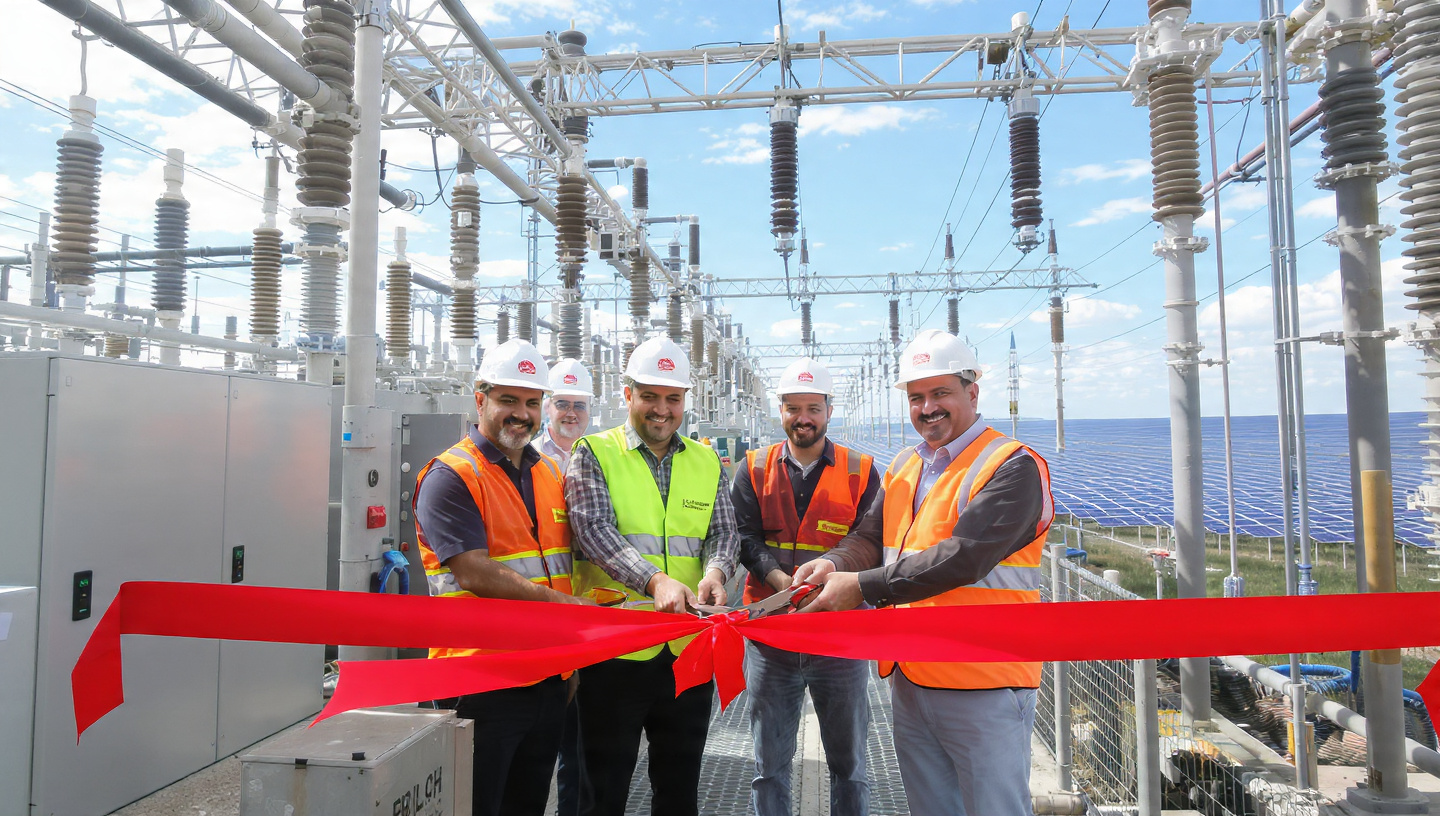
Federal agencies, military installations, municipalities, schools, and hospitals contracting solar and wind supply under 20–25 year agreements backed by sovereign-adjacent creditworthiness. Government contracts provide the highest certainty revenue in the portfolio — fixed-price, CPI-indexed, with multi-year budget authority.

Individuals, small businesses, and non-profits subscribing to a share of a larger solar installation and receiving utility bill credits in return. Community solar programmes combine high demand — typically 3× oversubscribed — with local mandate support, serving markets where distributed generation is the dominant policy pathway.
Revenue Architecture
Energio's revenue is generated through five distinct channels — each with different predictability, contract duration, and margin characteristics. Together they create a diversified, resilient income base.
Long-term contracted power sales under fixed-price agreements with utilities and corporates. The primary engine of revenue certainty — every MWh priced before it is generated.
Spot-market sales for uncontracted generation capacity. Higher price upside in peak demand cycles, partially hedged with financial instruments to cap downside.
Payments from grid operators for maintaining dispatchable or standby capacity available to the network. Independent of energy produced — a reliability premium.
Environmental certificates representing the clean energy attribute of each MWh generated — sold separately to corporations with renewable procurement targets and ESG mandates.
Revenue from frequency response, voltage support, and spinning-reserve services — predominantly from battery storage assets providing real-time grid stability.
Contract Structure
Every Energio asset sells its electricity under a long-term Power Purchase Agreement. Understanding a PPA's anatomy is the foundation for understanding why our revenue is predictable, legally protected, and visible to investors years in advance.
A fixed £/MWh or $/MWh strike price at which all power will be sold for the full contract term — immune to wholesale market volatility.
The offtaker commits to purchase all generation up to the agreed annual volume, providing a guaranteed revenue floor regardless of spot conditions.
Contracts run 10–25 years from commercial operations date, giving the asset a fully-funded revenue schedule before investor capital is deployed.
Power is invoiced monthly. Payment terms are 15–30 days from invoice, creating a predictable recurring cash flow cycle that maps directly to quarterly investor distributions.
Offtakers must maintain minimum credit ratings or post letters of credit. Ratings triggers and step-in rights protect contracted revenue if counterparty credit deteriorates.
Termination for convenience typically requires payment of the full remaining contracted revenue NPV — making early exit prohibitively expensive for the offtaker.
Revenue Flow
Trace exactly how every pound and dollar of electricity revenue moves through Energio's cost structure before reaching investor distributions.
Total PPA, REC, capacity, and ancillary revenue billed to customers annually.
Annual O&M contracts with specialist operators covering scheduled maintenance, monitoring, and insurance.
Fixed annual land rent and transmission connection charges across the portfolio.
Scheduled principal and interest repayments on senior project finance facilities. DSCR covenanted at 1.15× minimum.
Six-month forward operating expense reserve credited before any equity distribution.
0.85% annual management fee on NAV, paid quarterly in arrears to the manager.
Net distributable cash available to equity investors after all obligations are satisfied.
Retained earnings set aside for pipeline acquisitions and asset enhancement capex.
Quarterly distributions to investors, targeting 8.2% annualised return on committed NAV.
Returns Bridge
The path from electricity sold to distribution paid is a structured, legally-defined sequence with multiple oversight checkpoints. Here is exactly how it works.
Utilities, corporations, and governments pay fixed PPA tariffs for electricity delivered. Revenue is invoiced monthly and collected on 15–30 day payment terms.

Asset-level revenue is reduced by O&M, land, grid, and senior debt service to produce free cash flow (FCF). FCF is monitored by the independent administrator each quarter.

After reserves and fees, net distributable cash is declared by the board and paid quarterly to registered investors pro-rata to committed capital. Target yield: 13.3% p.a.

Every Energio PPA includes structural protections designed to maintain contracted revenue even if the counterparty experiences credit deterioration, insolvency, or termination events. Our legal team reviews every contract clause with specialist energy finance counsel before execution.
Revenue Protection
Revenue certainty is built into the legal structure of every contract — not managed after the fact.
All PPA offtakers must carry a minimum BBB− credit rating from at least one major rating agency, or post irrevocable letters of credit equivalent to 12 months of contracted payments.
If an offtaker's rating falls below BBB−, <?php echo e($siteName); ?> has the contractual right to demand additional collateral or trigger a replacement offtaker process within 90 days.
Any acquisition or change of control of the offtaker entity requires written consent from <?php echo e($siteName); ?> and may trigger a full contract renegotiation or early novation process.
If an offtaker terminates for convenience, they must pay a termination fee equal to the full NPV of remaining contracted payments — making early exit economically irrational.
Every generation asset carries all-risk insurance covering physical damage, revenue loss during outages, third-party liability, and cyber risk. Combined insured value: $2.4B.
An independent fund administrator monitors PPA payment receipts, reconciles invoices, and reports any payment shortfalls to the board within 5 business days of due date.
Start Investing
Every megawatt Energio operates is backed by a real customer contract. Every distribution is traceable to the electricity that produced it. That is the difference between clean energy as a story and clean energy as an investment infrastructure platform.
Every investment is backed by physical generation infrastructure — not derivatives, indices, or financial instruments alone.
Electricity is sold under formal contracts before investor capital is deployed. Revenue is visible before you invest.
Quarterly performance packs, annual audited accounts, and asset-level generation data — all available to registered investors.
Independent board, annual external audit, RICS valuation, and ring-fenced SPV structure for every asset.
Every fee, cost, and distribution calculation is published. No hidden margins, no estimated returns after unexplained deductions.
Four quarterly reports and one annual audited report every year — on a fixed schedule, without selective disclosure.